All the Water in the World
A storytime plan about our drinking water supply
Lesson Plan
The objectives of this lesson are to teach the children the following:
- Although there is a lot of water in the world, almost all of it is salt water, which we can’t drink or use to grow food;
- Only a tiny part of the world’s water supply is fresh water that can meet our drinking water and other water supply needs;
- We need to take care of our rivers, streams, lakes and groundwater, which supplies much of Wisconsin’s drinking water.
This lesson plan works well with children in preschool through second grade. The lesson lasts from 45 minutes to an hour, based on the number of books read.
Sing
Begin with your favorite welcome song.
Science Chat
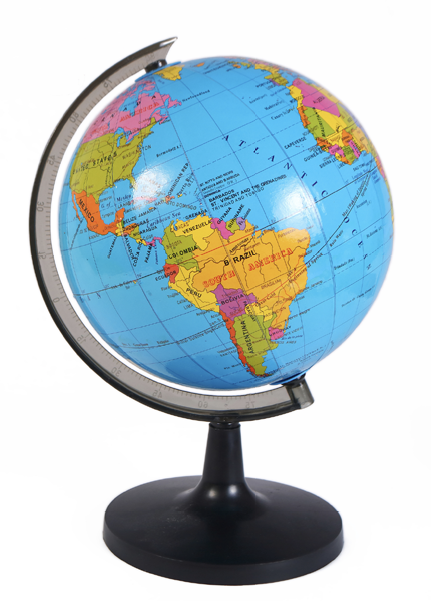
Ask the children how much water they think is in the world and how much of that water is drinkable. It is best to demonstrate with a map or a globe in hand.
Water Supply Brainstorm
Look at a globe (or map) with the students. See if they can find where they live.
- Have them point out the blue areas of the globe — lakes, rivers and oceans, especially those in Wisconsin. Explain that these are called surface waters.
- Ask the students if they know which kinds of water bodies are salt water (marine environments) and which are fresh water (aquatic environments). Have they ever tasted salt water? Was it good?
- Ask the students if they think there is more water or land on the globe. Is there water beneath the surface of the ground that we can’t see on the globe?
Water Supply Demonstration
Prepare 100 pieces of ziti pasta — dye or color one blue and two green, leaving the rest plain. (Use the pie chart that follows the “Did You Know” facts.)
Spread the ziti out on a table. Explain that there are 100 ziti pieces that represent all (100%) of the water in the world. Ask the students if they know what the green and blue ziti pasta represent?
- The 97 plain ziti pasta pieces represent the salt water in our oceans — 97% of all the water on earth (a water supply that is, at this time, too expensive and too energy-intensive to convert to fresh water on a large scale).
- Explain that the two green ziti pasta pieces represent water that is stored as ice in glaciers and at the poles (2%).
- The lonely blue ziti pasta piece represents the fresh water that is available for plants, animals and people (1%). And remind them that this includes water used for agriculture — something we might forget.
Ask the students what we should do to take good care of the water we use in our homes and businesses. This is a good time to encourage brainstorming — have the children say their suggestions in turn to the entire group. In sum: use only what you need.
Did You Know?
Facts about the Earth’s water
Earth is called a water planet.
Earth has different types of water:
| Oceans | 97% |
| Polar ice caps/glaciers | 2% |
| Groundwater/surface water | less than 1% |
| Atmosphere | itty bitty |
The 1% of groundwater/surface water that is drinkable by humans is used in several different ways:
| Agriculture | 42% |
| Electricity | 39% |
| Manufacturing | 8% |
| Household use | 11% |
Read
Here are some suggestions from the Wisconsin Water librarians, but feel free to swap out with your own favorites or visit our subject-specific reading lists: The Great Lakes, Oceans, Ponds and Lakes, Rivers, and Wetlands.
All book descriptions are quoted from the Cooperative Children’s Book Center (CCBC) or Kirkus Reviews (KR).
“A poetic, informative, and thoughtprovoking picture book looks at water from a global/environmental perspective but never loses sight of the personal for children…” (CCBC) Highly Commended, 2012 Charlotte Zolotow Award. For ages 4-8.
“In the 21 lighthearted, teasing poems and full-page paintings of ‘In the Swim,’ no rhyme is unrealized, no pun is left unturned. Florian’s quirky, inventive humor is brimming with wit and child appeal.” (CCBC) For ages 8-11.
“The rhyming text is expanded into a visual story by illustrations of a brown-skinned boy and girl interacting with the water cycle through the seasons as they wait for the school bus in the rain, skate on a frozen puddle, squelch through spring mud, and enjoy late summer cider.” (CCBC) Highly Commended, 2016 Charlotte Zolotow Award. For ages 4-9.
“Kids who wonder why their fingertips get wrinkly in the bathtub will find the answer to this question and other scientific stumpers in this simple but not simplistic study of the ways of water… Easy, quick experiments are interwoven into the text, delivered in a chatty style…” (Kirkus Reviews) For ages 3-6.
“Water not only rolls and rises, it slithers, snakes, streams, slides, hums, plunges, skids, slips and much, much more in this language-rich offering… Each three-line verse in [Pat Mora’s] bilingual (English/ Spanish) tribute to water is set against an expansive watercolor painting by Meilo So inspired by a specific geographic place on earth that is noted at volume’s end.” (CCBC) Honor Book, 2015 Charlotte Zolotow Award. For ages 5-8.
“An imaginative picture book describes water in tangible terms that are intriguingly varied with each season… The rhyming couplets provide creative ways of looking at water in each season, while the illustrations ground the ideas with concrete images.” (CCBC). Highly Commended, 2015 Charlotte Zolotow Award. For ages 4-7.
“Josephine Mandamin, concerned about water quality and conservation, organized a group of other Ojibwe women to walk around all the Great Lakes and the St. Lawrence River, blessing and singing to the water. They accomplished this remarkable feat in seven years, and then organized women from other Native Nations to do the same with the Atlantic and Pacific Oceans, the Gulf of Mexico, and in the frozen north. The account uses numerous Ojibwe words (defined in the glossary) to give a strong sense of setting and of the organizer’s Ojibwe heritage. Other colorful details, such as the fact that [Mandamin] went through 11 pairs of sneakers on her walks, make her unusual story particularly appealing to children.” (CCBC) For ages 6-10.
“A first-person narrative in Spanish and English tells the story of the water cycle. Agüita (Little Water) starts the journey deep inside Mother Earth, gradually working its way to the surface, where it forms as a drop of morning dew. It eventually makes its way into a river and then into the sky. Argueta’s poetic text moves from the smallest drop to an everexpanding personification of water (‘I am all colors / and have no color. / I am all flavors / and have no flavor. / I am all shapes / and am shapeless …’) Ugalde Alcántara’s textured paintings suggest Aztec-inspired symbols, and the text itself appears in Nahuat at the back of the book.” (CCBC) For ages 3–6.
Sing
Use any song you like adapted to the theme of water. Here is one suggestion:
Row, row, row your boat gently down the stream.
Merrily, merrily, merrily, merrily, life is but a dream.
Rock, rock, rock your boat gently down the stream.
If you see a crocodile, don’t forget to scream. (“Ahhhh!”)
Row, row, row your boat gently to the shore.
If you see a lion there, don’t forget to roar. (“Rawwwwr!”)
Do Science
A Science Taste Test
Supplies:
- 2 pitchers of water
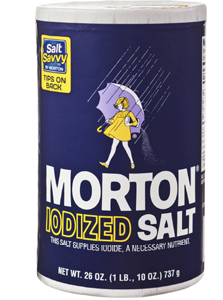
- 1 box of salt
- Paper cups
How to:
- Review the amount of water available for drinking in the world.
- Fill two pitchers with water.
- In one pitcher, pour a substantial amount of salt.
- In the other pitcher, leave the water as is.
- Ask the kids to take a “taste test” of the world’s saltwater/undrinkable seas.
- Do they like it?
- If not, how should they think about their drinking water supply?
Craft
Ziti Necklace
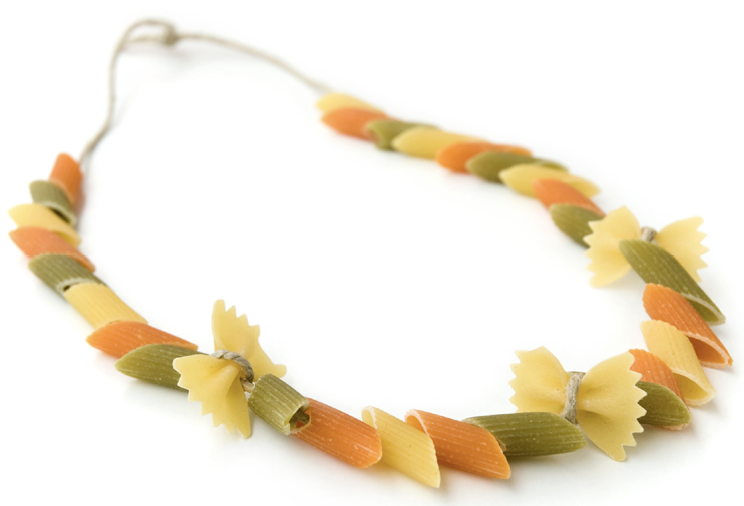
Supplies:
- Boxes of uncooked ziti pasta, can be different colors
- String or narrow yarn (small enough to be threaded through ziti and strong enough to hold it)
How to:
- Make necklaces by stringing thread or yarn through the ziti and tying.
Ask:
- While the kids are working on the craft, review the information in this lesson plan and discuss how to be a good water citizen.
Learn More About the Water Supply
-
United States Geological Survey (USGS) Water Science School
-
Water Footprint Network
-
US Environmental Protection Agency (EPA)
-
EPA environmental resources for educators
-
National Wildlife Federation (NWF) Educator Tools
-
Scientific American “Bring Science Home”
-
National Geographic Society Teaching Resources
-
Smithsonian Science Education Center: “How Can We Provide Freshwater to Those in Need?”
-
USGS Water Science School: “Desalination”