Research
Looking for more detailed information on water? Explore these publicly available resources to get started. The Wisconsin Water Library is also happy to help facilitate your research. Get in touch via our Ask Water Form, email us at askwater@aqua.wisc.edu, or call the library at 608-262-3069 to begin your research.
Water Research Guide
The library has assembled resources for researching a wide range of topics related to aquatic sciences and the Great Lakes in our Water Research Guide.
Topics
Explore pages from our Water Research Guide, with resources curated by librarians at the Wisconsin Water Library.
Microplastics Research Guide
This research guide specifically addresses how the fashion industry intersects with microplastics and our growing understanding of microplastics within the Great Lakes and waters of Wisconsin.
Great Lakes Maritime History and Archaeology Research Guide
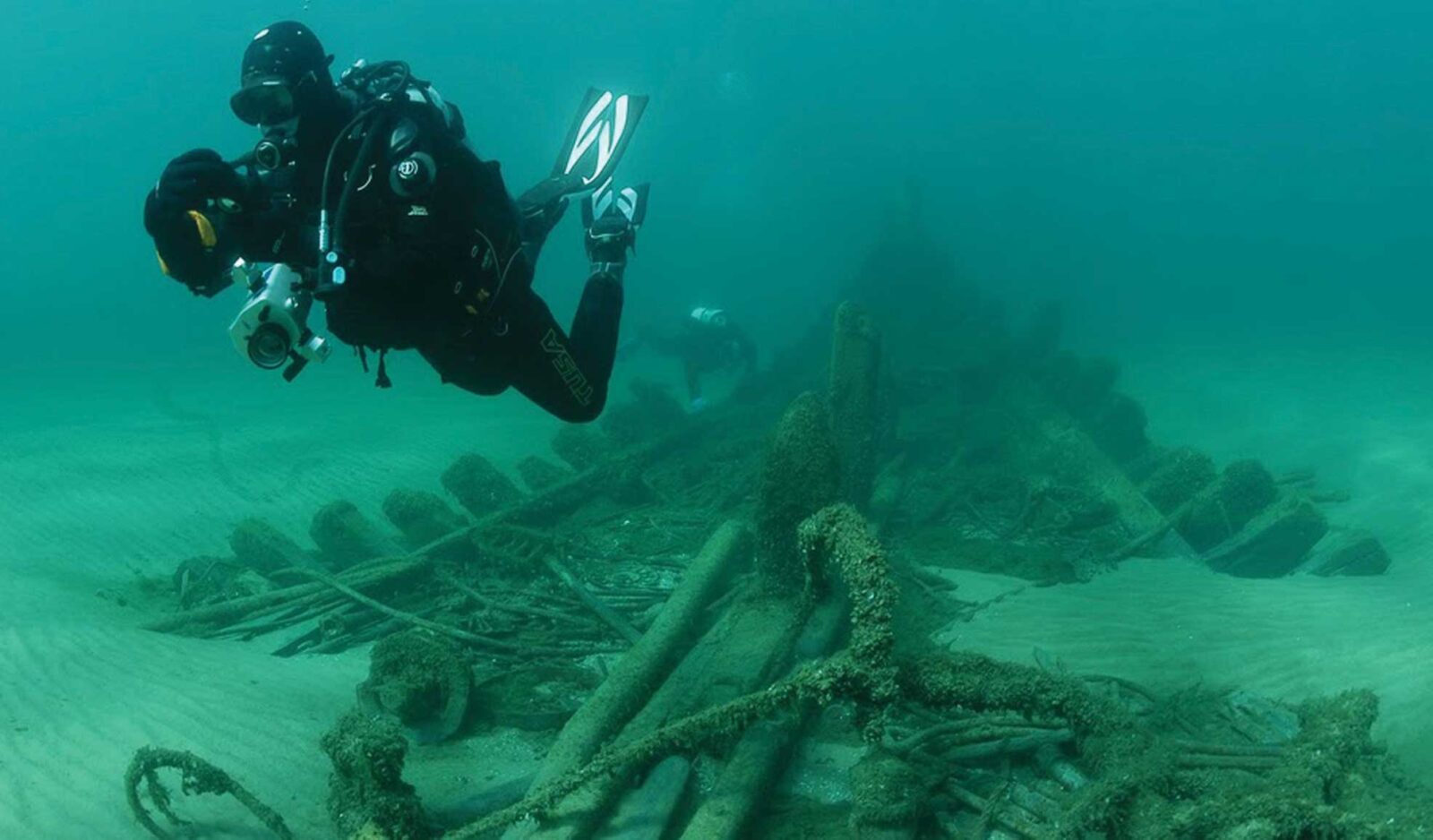
This research guide collects resources for anyone interested in Great Lakes shipwrecks, maritime history, and archaeology. Some resources are available to the general public, including books from the Water Library, some journals, and websites about Great Lakes maritime history and ships.
Databases
These databases are publicly available online or through your Wisconsin public library. If you are affiliated with the UW–Madison, you also have access to the UW–Madison Libraries databases.
Agricola
A free public version of the National Agricultural Library (NAL) database, this site includes publications and resources encompassing all aspects of agriculture and allied disciplines, aquaculture and fisheries, farming, agricultural economics, extension and education, and earth and environmental sciences.
BadgerLink
BadgerLink is a collection of databases available to residents of Wisconsin that provides a “common” set of resources to schools, businesses, hospitals, libraries, and residents on a wide range of subjects including many aspects of water.
US Environmental Protection Agency (EPA) Online Library System
Includes several databases including the EPA’s National Library Catalog, EPA documents in the National Technical Information System (NTIS) and other special collections.
GreenFILE
For high school, college-level and adult researchers, with articles covering all aspects of human impact on the environment.
Ingenta
A comprehensive online content platform providing access to over 4.2 million scholarly articles, books, and reports from 10,700+ publications across various fields like medicine, sciences, and humanities
NAL Water Resources Database
The National Agricultural Library’s Water Quality Information Center has put together this listing of many publicly available databases.
National Technical Information System (NTIS) Title Search
This abbreviated version of the NTIS database can be searched by title or topic. Includes the 450,000 NTIS products and publications issued since 1990.
TOXNET
Toxicology Data Network. A cluster of databases on toxicology, hazardous chemicals, and related areas. Includes Toxline.
USGS Science in Your Watershed
Long list of databases related to water, from USGS, EPA, and others.
Water Science and Technology Board Publications
The National Academies’ Water Science and Technology Board conducts studies on all aspects of water resources, including science, engineering, economics, policy, and social concerns. The full text of their publications in .html format can be read online.
Water Measurement Manual
This guide (3rd edition, 1997; with corrections through 2003) provides water users and districts guidance in selecting, managing, inspecting, and maintaining their water measurement devices.
Comprehensive Websites
The Wisconsin Water Library offers reliable sources to start your exploration of water-related topics. These databases complement the Water Research Guide for
researching a broad range of topics.
Great Lakes Information Network (GLIN)
GLIN offers an abundance of information about the Great Lakes region’s environment, economy, tourism, education, and more. Plus, this well-organized and easy-to-use site provides many links to additional sources of reliable information.
National Agricultural Library (NAL) Water Quality Information Center
NAL’s Water Quality Information Center website emphasizes water quality and agriculture. Examples of water quality information available include bibliographies, announcements of upcoming meetings, a listing of internet discussion groups covering water issues, water-related databases, and annotated links to other internet sites providing water quality information.
US EPA Office of Water
The Office of Water web site provides EPA program information, water laws and regulations, links to regional offices, online publications, training information.
US Fish and Wildlife Service
Information about US Fish and Wildlife Service programs, but also has many links to other sites, particularly for wetlands and invasive species.
US Geological Society (USGS), Water Resources
The USGS Water Resources Division is the first place to look for online water data. The National Water Information System (NWIS) contains selected water resources data for approximately 1.5 million sites across the United States, selected territories, and border locations, from 1857 to present. The site also provides water quality, water use, acid rain, and more as well as program information, full-text publications, links to state USGS programs, and other sources of information.
USGS Upper Midwest Water Science Center
The USGS Upper Midwest Water Science Center offers information on streamflow, water quality, water-use, and groundwater data for Minnesota, Wisconsin, and Michigan.
Wisconsin Dept. of Natural Resources, Environmental Management Division
The Environmental Management (EM) Division protects human health and the environment by working in partnership with citizens, communities, businesses, and advocacy groups. The division recognizes the interrelationships between air, land, and water resources and relies on environmental indicators, feedback from others, and self-evaluation to continually improve services.
Indigenous Literature and Knowledge in Libraries
At the Wisconsin Water Library, we understand that all voices should be reflected in our collection and in our work in Great Lakes literacy. We consulted with historian, scholar, and children’s book author Katrina Phillips, to learn more.
Water Facts
The Wisconsin Water Library offers reliable sources to start your exploration of water-related topics. We can help with anything from ideas for a research paper to education resources for kids.