Dive Into History Book Club
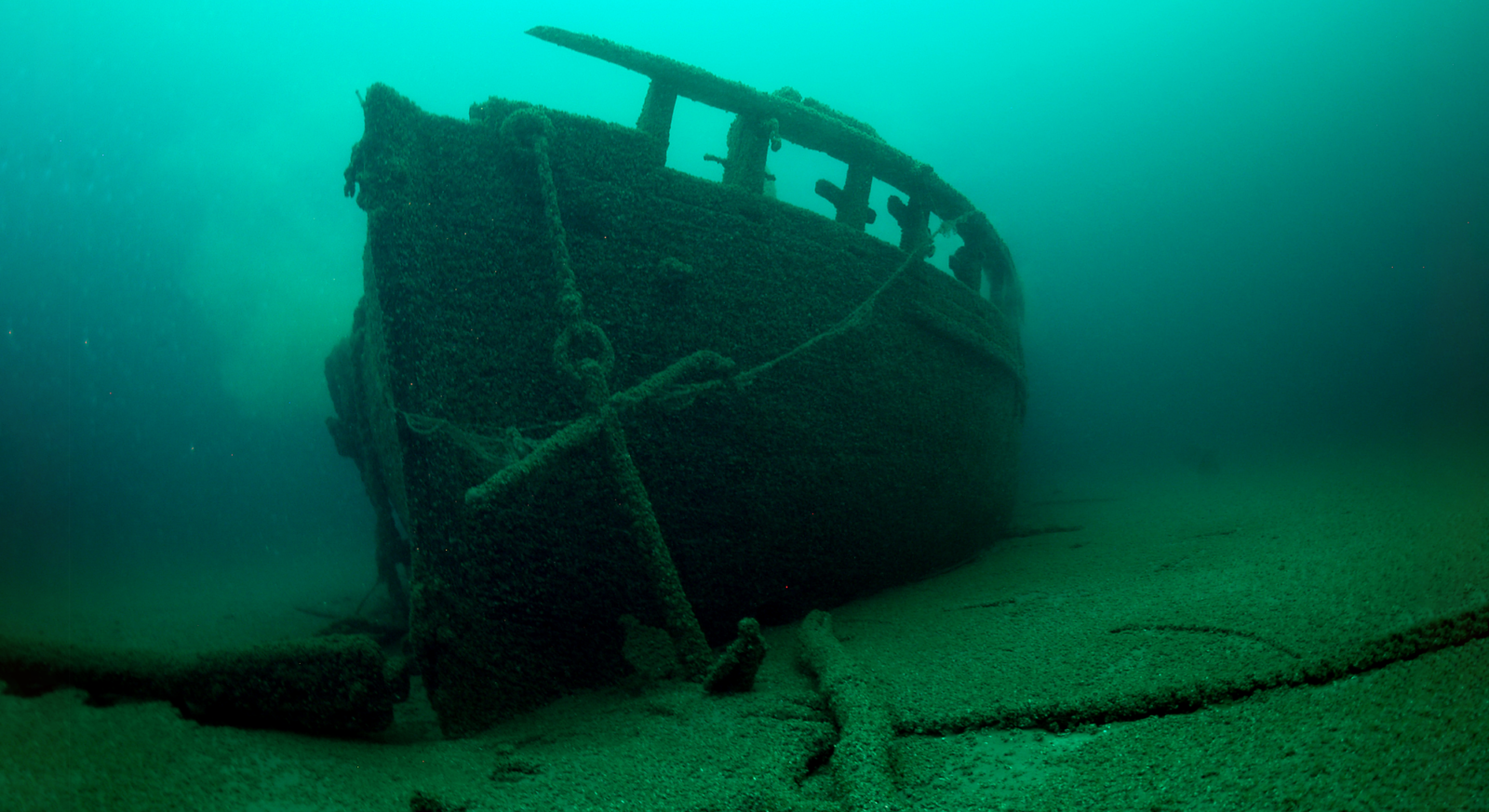
Explore our maritime history
Welcome to Dive Into History Book Club – Maritime History for all! We are an online book club, and we read books with a focus on Great Lakes maritime history and shipwrecks. We meet virtually twice in the fall and twice in the spring each year. In 2026-2027, we will be meeting on Wednesday evenings at 7pm Central time (see below for dates). This book club is open to everyone – we would love to have you join us!
Fall 2026
October 7, 2026 | 7 p.m.
Maritime History and Shipwreck Overview
For this inaugural meeting, a guest speaker, Kendra Kennedy, will talk about maritime history and archaeology in Wisconsin and the Great Lakes.
Ms. Kennedy has over 20 years of experience as an archaeologist in the Midwest, Mid-Atlantic, Southeast, and Gulf South and is currently a maritime archaeologist with the Wisconsin Historical Society. She has a B.A. from the University of Notre Dame and a M.A. in historical archaeology from the University of West Florida. She has worked as an archaeological consultant, State Historic Preservation Office (SHPO) reviewer, instructor, and grant writer. Ms. Kennedy is passionate about public outreach and working with citizen scientists to advance the discipline.

November 4, 2026 | 7 p.m.
Wrecked: The Edmund Fitzgerald and the Sinking of the American Economy by Tom Nelson and Jerald Podair
Wrecked links the story of America’s most infamous shipwreck to the story of an even larger disaster—the wreck of the American industrial economy.
Spring 2027
February 3, 2027 | 7 p.m.
Coming soon
If you have a book suggestion, please let us know by sending an email to askwater@aqua.wisc.edu.
April 7, 2027 | 7 p.m.
Coming soon
If you have a book suggestion, please let us know by sending an email to askwater@aqua.wisc.edu.
Dive into History Research Guide
Check out this research guide focusing on Great Lakes maritime history and archaeology, including shipwrecks! It includes resources that are available to the general public as well as the UW–Madison community.
Our many thanks to our co-sponsor, the Wisconsin Historical Society